Maximizing Grant Writing Success: A Roadmap for Nonprofits January 29, 2026

Sustaining and expanding the work of a nonprofit requires money, and finding and obtaining that capital can take many forms, from earned revenue to grant funding, donations, and more. Building a diverse mix of income sources is essential for long-term financial health, ensuring the continuity of the organization’s work if any single revenue stream disappears and enabling team members to remain focused on the mission and the people served rather than unexpected budget gaps. 

We’ve shared insights previously about how nonprofits can leverage loans to achieve their goals, which often enables the organization to expand its capacity and impact more quickly than would otherwise be possible. To put the organization in the best position to secure a loan, however, requires stable, consistent revenue, underscoring the importance of a robust grant pipeline that provides the funding needed to support the organization’s day-to-day work.  

To help nonprofits bolster their grant writing process, IFF’s Resource Development team compiled the overview below, which provides clear, practical tips for nonprofits—from preparation and planning to the submission of grant applications, as well as steps to take if a grant application isn’t successful on the first try.  

These tips are based on IFF’s experience and designed to help nonprofits strengthen their grant writing process, but it’s important to note that funding decisions are solely the discretion of each grant maker. The tips below should be used to inform the organization’s approach, but it’s also critical to understand the priorities and preferences of each funder to maximize the organization’s chances of securing grant funding.

Tips for Preparing, Writing, and Submitting the Proposal

Preparation and Planning

Writing and Structure 

Details and Submission 

Regrouping After an Unsuccessful Grant Application

Grant funding is extraordinarily competitive, and even the best applications don’t result in funding every time. There are a myriad of reasons for this, and we’ve outlined some of the most common reasons for rejection below, along with tips to increase the organization’s chances of receiving funding in future grant cycles 

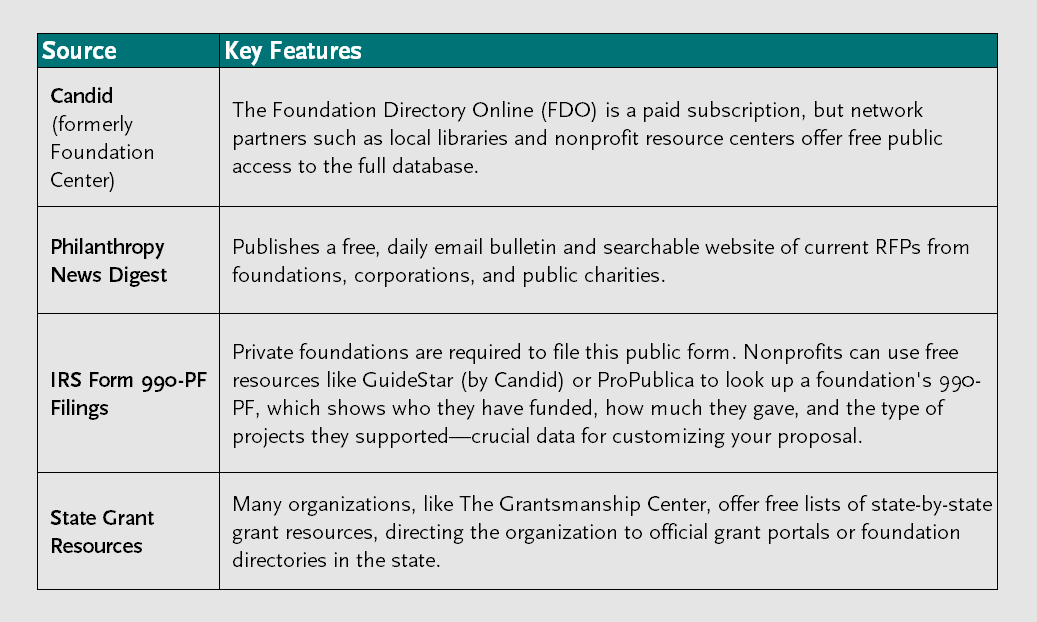
Grant Resources

For nonprofits seeking grants, we’ve included below a list of resources to help identify funding opportunities that align with organizational priorities  

Categories: Resources

Tags: