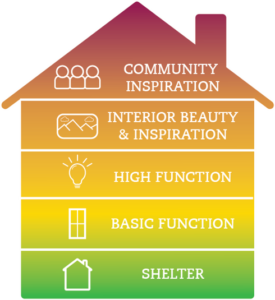
At the most basic level, an ECE facility needs four walls, windows, a roof, electricity, a water source, and a bathroom. This setup can barely be described as a “facility” at all, though; it is simply program space. Fortunately, licensing standards in most states have created a baseline for health and safety that have greatly reduced the percentage of ECE spaces existing at this level. While the health and safety of young children is protected by these standards, these shelter centers fail to provide for much else.
In the shelter category, staff must spend as much time managing a dysfunctional environment as they do serving children. Often located in auxiliary spaces in facilities built for other purposes and used by other people, these spaces are generally borrowed, donated, or rented for a nominal fee. Poor lighting and lack of windows are common. In some cases, staff must entirely “break down” classrooms to accommodate other uses for the space when children are absent, making it nearly impossible to create any type of permanency.
Furthermore, the daily logistics of a shelter space actively undermine quality care. When plumbing, water sources, and bathrooms are located far from the classroom, staff are forced to carefully choreograph group toileting and restrict water-based activities to maintain mandatory staffing ratios. Inadequate kitchen amenities similarly disrupt mealtimes for staff trying to prepare and serve food in a space designed for other purposes.
Beyond these daily programmatic hurdles, ECE centers in the shelter category burden providers with significant operational concerns. Unreliable HVAC systems, spotty electricity, noise problems, and limited or no storage present constant challenges that undermine the quality of programming. Compounding this is a lack of control over the space, with providers entirely at the mercy of their landlords. Neglected sewer systems, faulty roofs, and poor snow removal frequently interrupt provider services or force sudden closures, disrupting family work schedules contributing to 74 percent of working parents reporting they’ve missed at least a few hours of work because of child care challenges.
Adapting these spaces is nearly impossible—making licensing requirements difficult to meet—and virtually no accommodation can be made for the comfort and dignity of those who use the space. Deferred maintenance and increased overhead costs mean funds that could go to professional or programmatic development are instead used just to stay open day-to-day.